


Using Your Mirrors on a Roundabout: A Simple Guide for Learner Drivers
Roundabouts are one of the most common features on UK roads, and while they might look simple from the outside, they require a lot of awareness, timing and careful decision making. One of the biggest challenges for learner drivers is knowing how and when to check their mirrors correctly. Using your mirrors well helps you maintain safe positioning, avoid collisions and understand what other road users are doing around you.
For learners preparing for lessons or the driving test, using your mirrors on a roundabout is a key skill. Examiners look for smooth observations, good judgement and clear decision making. Mirror checks help you stay aware of cars changing lanes, cyclists approaching from behind and vehicles entering or exiting the roundabout at the same time as you.
This simple guide breaks down everything you need to know so you can approach roundabouts with confidence.
Why Mirror Checks Matter on Roundabouts
Roundabouts are busy, constantly moving and often unpredictable. Cars enter from several directions, exit at different points and change lanes quickly. Cyclists and motorcyclists often filter through traffic, and some drivers may not signal correctly.
By using your mirrors on a roundabout, you improve your chances of spotting important details early. Mirror checks help you identify vehicles behind you, understand the speed of approaching traffic and spot hazards such as cyclists or merging cars.
Good mirror use helps prevent dangerous lane changes, sudden braking and misunderstandings with other drivers.
Using Your Mirrors on a Roundabout: Before You Approach
Your mirror routine begins long before you reach the give way line. As you approach a roundabout, you need to understand what is happening behind and around your vehicle.
Your first task is to check your mirrors when you start to slow down. Look into your interior mirror to see how close the car behind is. Then check your left or right door mirror depending on your intended exit or lane position.
This early check tells you whether it is safe to reduce speed, whether a cyclist is coming up the side and whether you may need more space before entering.
Building this habit is essential for safe roundabout driving.
Positioning Your Car Correctly
Positioning is one of the most important elements of roundabout driving. You should be in the correct lane early so that other drivers know where you plan to go.
Whenever you change position on approach, check your mirrors. If you move from the left lane into the right lane or vice versa, look into your interior and side mirrors to ensure the lane is clear.
Using your mirrors on a roundabout helps you avoid cutting across another vehicle or causing confusion with your movements.
Using Your Mirrors on a Roundabout: When You Signal
Signalling is part of the MSM routine: mirror, signal, manoeuvre.
Every time you signal, you must check your mirrors first. If you plan to signal left for the first exit, check your left mirror. If you plan to turn right, check your right mirror.
This allows you to see whether a cyclist, motorbike or car is already in the space you want to move into. Incorrect signalling without mirror checks is a common learner mistake.
Judging Traffic While Approaching
Many learners look only to the right when approaching a roundabout. While looking right is essential because traffic from that direction has priority, focusing only on one side can make you miss important information behind or beside you.
A quick mirror glance helps you understand what is happening behind you before you enter. A car coming up fast behind you might influence your decision to proceed or hold back.
This awareness reduces the risk of hesitation, panic or sudden braking.
Using Your Mirrors on a Roundabout: When You Enter
Entering a roundabout requires quick yet calm decision making. You should already know your lane position, your direction and whether it is safe to proceed.
A final mirror check before you enter helps confirm that no cyclist, motorbike or fast moving vehicle is attempting to overtake you. This is particularly important if you are entering from the left lane.
Learners often forget this step, but it is a key part of the overall routine.
Staying in Your Lane
Roundabouts vary in size and layout. Some have clear markings and arrows, while others are more complicated or worn down. It is important to stay in your lane and avoid drifting into another.
If you start to drift, another car may be in the blind spot. Checking your mirrors frequently helps you stay centred and predict whether another vehicle might move unexpectedly.
Using your mirrors on a roundabout helps you maintain lane discipline, which examiners pay close attention to.
Using Your Mirrors on a Roundabout: Before You Exit
Your exit is one of the most important moments for mirror checks. Exiting requires you to move left and signal, so you must know whether that movement is safe.
Check your left door mirror to make sure no cyclist, motorcycle or car is attempting to pass on your left. This is especially important at multi lane roundabouts, where drivers may use different lanes to exit.
Mirror checks before exiting help you avoid cutting someone off and ensure your manoeuvre is smooth and safe.
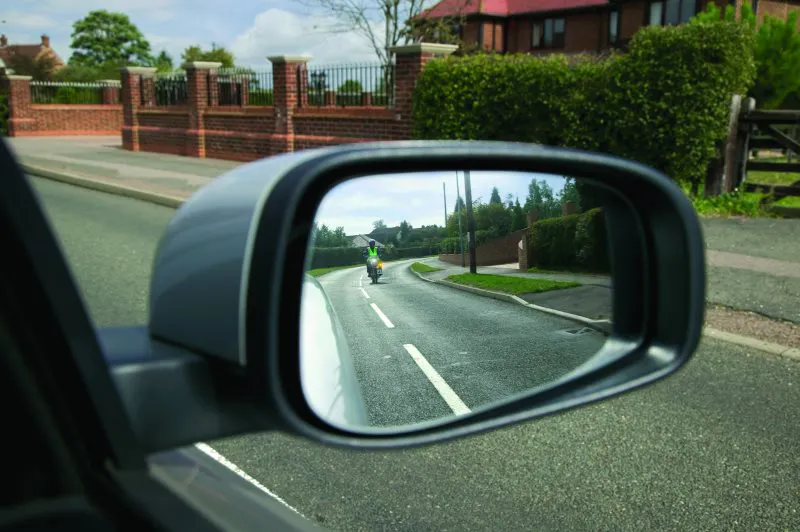
Understanding Cyclists and Motorcyclists
Roundabouts can be particularly dangerous for cyclists and motorcyclists because they are harder to see and more vulnerable.
Using your mirrors on a roundabout helps you keep track of their movements. They may approach quickly or filter between lanes.
Checking mirrors helps reduce blind spots and increases your awareness, making the roundabout safer for both you and them.
Using Your Mirrors on a Roundabout: Multi Lane Roundabouts
Multi lane roundabouts can feel overwhelming for learners. They require extra observation because cars can change lanes suddenly or position themselves incorrectly.
Each lane movement should include a mirror check and a shoulder glance if necessary. If you switch from the right lane to the left lane to exit, look into your interior mirror first, then your left mirror.
Staying aware of the traffic around you helps you navigate multi lane roundabouts calmly and safely.
What Examiners Look For
During your driving test, the examiner will expect consistent and well timed mirror checks.
They want to see that you are using your mirrors on a roundabout naturally, without overthinking or performing exaggerated movements. They will also watch for safe decision making, smooth lane discipline and good anticipation.
Missing a mirror check at a critical moment can result in a serious fault, especially if it affects another road user.
Using Your Mirrors on a Roundabout: Avoiding Common Mistakes
Learner drivers often make similar mistakes on roundabouts. Some forget to check mirrors before signalling, while others check too late. Some rely only on shoulder checks and ignore the mirrors entirely.
To avoid these mistakes, build a routine of mirror checks during every part of the roundabout approach, entry, positioning and exit.
Consistency is key. The more you practise, the more natural the habit becomes.
Scanning, Not Staring
Mirror checks should be quick glances, not long stares. If you stare at the mirror for too long, you lose awareness of the road ahead.
Using your mirrors effectively is about scanning. Look, absorb the information quickly and return your eyes to the front. Smooth scanning supports safe driving without disrupting your control of the vehicle.
Using Your Mirrors on a Roundabout: Practising With Your Instructor
Your instructor will guide you through mirror routines and help you learn the right timing. Ask them to quiz you during lessons by asking what you see in each mirror.
This strengthens your awareness and helps you understand the purpose behind each check.
Regular practice builds confidence, especially if you find roundabouts stressful.
Developing Automatic Mirror Habits
The goal is to reach a point where mirror checks become automatic. You should not have to overthink them. They should blend naturally into your driving routine.
When your mirror checks become consistent habits, you reduce the risk of mistakes and become a more confident and aware driver.
Building these habits early sets you up for long term safety.
Final Thoughts
Roundabouts can feel challenging for learner drivers, but mastering them becomes much easier when you know how to use your mirrors correctly. Mirror checks keep you aware of other road users, support safe decision making and help you navigate confidently.
By practising consistently and understanding the purpose behind each mirror check, you develop strong habits that help you stay safe on the road.
Using your mirrors on a roundabout is a skill that improves with experience. The more you practise, the more natural it becomes.


