


Using a Sat-Nav in Driving Lessons: How to Stay Calm and in Control
Learning to drive involves mastering a wide variety of skills, and one of the most important modern driving skills is learning how to use a sat-nav confidently. Sat-navs are now a standard part of everyday driving, and they also form a major component of the UK practical test. During the independent driving section of the test, most learners are asked to follow a sat-nav for about 20 minutes. For many new drivers, this is one of the most intimidating parts of the test and often a source of unnecessary panic.
Using a sat-nav in driving lessons gives you the perfect opportunity to learn how to follow directions safely without feeling overwhelmed. Many learners worry about misunderstanding instructions, taking the wrong turn, reacting too slowly or becoming distracted. These concerns are completely natural. The good news is that the more practice you get, the more normal and manageable the sat-nav becomes. This guide explains everything you need to know about using a sat-nav in driving lessons, how to stay calm, what mistakes to avoid and how to build real confidence before your test.
Why Sat-Nav Skills Matter in Driving Lessons
Using a sat-nav in driving lessons prepares you for much more than the test itself. In everyday life, most drivers rely on a sat-nav whenever they travel somewhere unfamiliar. Whether you are driving to a job interview, visiting a friend, starting university or running errands in a new area, you will almost certainly use sat-nav navigation. Developing this skill early ensures you feel comfortable not only with the device but also with the responsibility of following directions in real traffic.
Sat-nav practice teaches you how to listen to instructions calmly, how to process information while driving and how to anticipate turns without relying on someone else to guide you. It creates independence. It also helps you develop your forward planning skills, because you begin to anticipate junctions, lane changes and turns based on the sat-nav’s guidance. These skills stay with you long after you pass your test and are essential for everyday driving.
Understanding How Sat-Nav Instructions Work
A sat-nav gives two types of guidance: spoken instructions and visual directions. Spoken instructions usually begin with phrases like “turn left ahead,” “cross the roundabout and take the second exit,” or “follow the road for one mile.” The visual display shows a simple map with arrows, distance measurements and upcoming turns.
The spoken instructions are the most important part. You should only use the screen for brief confirmation, exactly like you would glance at a mirror. Many learners mistakenly think they must look at the screen constantly, but that creates distraction. Understanding that the screen is secondary makes sat-nav use much more relaxing.
You will quickly learn the rhythm of sat-nav instructions. Most sat-navs repeat instructions several times, and they warn you before a turn is coming up. This gives you plenty of time to prepare, check mirrors, signal and position the car safely.
Using a Sat-Nav in Driving Lessons: Building Confidence Step by Step
Your instructor will introduce sat-nav skills gradually to avoid overwhelm. The first time you use it, the route will be simple, with gentle turns and familiar roads. The goal is not to test you but to help you get used to listening and responding without stress. As your confidence grows, the instructor will introduce slightly more complex routes, including roundabouts, multi lane roads or areas with more traffic.
By moving at a comfortable pace, you learn to stay calm even when the sat-nav gives several instructions in a row. You will practise judging appropriate timing, reacting smoothly and prioritising safety at all times.
Learning how to use a sat-nav in driving lessons also teaches you how to cope with uncertainty. Sometimes the sat-nav repeats instructions. Sometimes you mishear it. Sometimes you feel unsure of the road layout. These moments help you develop resilience and trust your driving skills.
The Most Common Sat-Nav Mistakes Learners Make
When using a sat-nav in driving lessons, learners often make similar mistakes. Recognising these early helps you avoid them and feel more in control.
One of the biggest mistakes is staring at the screen. This distracts you from the road, reduces your awareness and creates unnecessary stress. Another common mistake is rushing. Learners often panic when they hear a direction and try to act immediately, even if it is not yet safe or necessary.
Another very common issue is worrying too much about making mistakes. Learners often believe that missing a turn means they have failed. This is not true. Taking a wrong turn is not a fault on the test unless you do something unsafe. The sat-nav will simply reroute you.
Understanding these mistakes helps you stay calm and prevents panic from building up.
How to Stay Calm and Avoid Panic When Using a Sat-Nav
Staying calm is essential when using a sat-nav in driving lessons. A good starting point is to breathe slowly whenever the sat-nav gives an instruction. This prevents your mind from jumping into panic mode. Listen to the full instruction before acting.
Next, remind yourself that the sat-nav gives instructions early. You will always have time. If it says “turn right in 300 yards,” that is a long distance. You can prepare gradually by checking your mirrors, signalling and adjusting your position.
Another crucial way to stay calm is to trust your instructor. Even during the independent driving practice, your instructor will always be there for safety. You are not alone. Knowing this removes pressure and helps you focus on driving rather than worrying about perfection.
Finally, if you feel confused or overwhelmed, focus only on the road. Safe driving always comes first, and the sat-nav can wait.
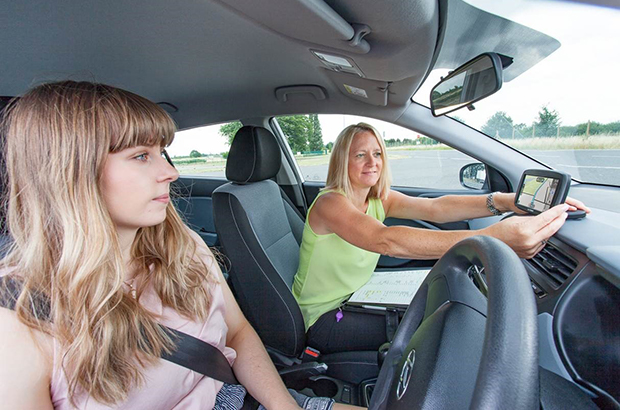
Why Road Awareness Always Comes Before Sat-Nav Instructions
Using a sat-nav in driving lessons teaches you how to prioritise correctly. No matter what the sat-nav says, you must always prioritise road signs, traffic conditions and safety. The device cannot see the situation you are in, so your judgement takes priority.
If the sat-nav tells you to turn but traffic is heavy, you wait. If it instructs you to stay in a lane but there is a hazard, you adjust accordingly. This mindset keeps you safe and demonstrates strong driving ability.
Learning to trust your judgement not only reduces panic but also improves your confidence. You begin to understand that you are in control, not the sat-nav.
How Instructors Introduce Sat-Nav Features Safely
Your instructor will guide you through different aspects of using a sat-nav. They may begin by muting the device and explaining what common phrases mean. Later, they will let the sat-nav’s voice guide you so you learn to rely on the instructions.
They will also help you understand lane guidance, especially at roundabouts and larger junctions. You will practise re-routing when you miss a turn, because this is an important real world skill. Re-routing teaches you how to stay calm when things change unexpectedly.
Using a Sat-Nav in Driving Lessons: Understanding Wrong Turns Without Stress
Taking a wrong turn is one of the main reasons learners panic. But wrong turns are absolutely normal. Even experienced drivers occasionally miss their turning.
The key is not to react emotionally. The sat-nav will simply calculate a new route. During your driving test, this is not marked as a fault unless your reaction to the wrong turn is unsafe.
By learning to recover calmly, you show maturity and strong decision making.
How Sat-Nav Skills Improve Real World Driving Confidence
Using a sat-nav in driving lessons helps you build real world confidence. Once you pass your test, you may need to drive on unfamiliar roads, travel long distances or handle complex junctions. Knowing how to follow sat-nav instructions calmly makes these situations much easier.
Sat-nav practice also improves your lane discipline, forward planning and hazard perception skills. You learn to anticipate what is coming up and prepare early, which makes you a smoother and safer driver.
What to Practise to Improve Your Sat-Nav Skills
To improve your sat-nav skills, focus on listening carefully without relying too heavily on the screen. Practise reacting calmly to instructions, checking mirrors regularly and preparing early for turns. You can also ask your instructor to practise more challenging routes or to simulate test conditions.
The more you practise, the more natural using a sat-nav becomes. Eventually, it will feel as normal as checking your mirrors or signalling.
Final Thoughts
Using a sat-nav in driving lessons is an essential skill that prepares you for both the theory and the reality of modern driving. With practice, you will learn how to stay calm, remain focused and follow directions confidently without panicking. Remember that the road always comes first, wrong turns are a normal part of learning and calm driving always leads to better decision making.
Mastering the sat-nav early gives you independence, confidence and the ability to drive anywhere safely long after you pass your test.


