

Driving in Bad Weather: A Learner’s Guide to Wind, Fog and Low Visibility
Learning to drive means preparing for every kind of weather, not just bright sunny days with dry roads and perfect visibility. In the UK, road conditions can change quickly, and as a learner driver, you must be ready to handle wind, fog, rain, mist and poor visibility. While these conditions might feel intimidating at first, they also teach you some of the most important skills you will ever learn as a driver: calmness, anticipation, awareness and control.
Understanding how to stay safe when driving in bad weather will help you become a more confident, responsible and capable driver on the roads. This guide breaks down everything you need to know about handling wind, fog and low visibility as a learner.
Why Driving in Bad Weather Feels More Challenging
When the weather changes, so does the behaviour of your car, the road surface and other drivers around you. Strong winds can push your car sideways, fog can remove almost all visibility, and low light conditions can make it difficult to judge distance and speed. These challenges can understandably make new drivers nervous. The good news is that bad weather driving is not about special techniques or advanced skills; it is about slowing down, observing more carefully and adjusting your driving to the conditions around you. Once you understand what your car needs in each kind of weather, you will find that driving in these conditions becomes far easier.
Driving in Bad Weather: Understanding How Weather Affects Your Car
A key part of learning safe driving in poor conditions is understanding how weather affects your car’s grip, stability and visibility. In strong wind, the side of the car acts like a sail, which means gusts can push the vehicle sideways unexpectedly. When fog sets in, your headlights reflect off the water droplets in the air, making it harder to see clearly. If visibility is low, you may struggle to see road signs, markings, brake lights and hazards until the last moment. Knowing how weather impacts your car prepares you mentally and helps you react calmly on the road.
Reducing Speed: The Most Important Rule in Bad Weather
No matter which type of bad weather you experience, reducing your speed is always the most important step. Speed gives you less time to react, less time to brake and less time to process what is happening ahead. When driving in bad weather, lowering your speed helps you maintain control even if the road becomes slippery or visibility is extremely limited. Slowing down might feel like a simple step, but it is one of the most effective ways to stay safe.
Driving in Bad Weather: Handling Strong Winds as a Learner
Strong winds are often underestimated, yet they can create significant instability, especially on open roads, bridges and rural routes. When your car is hit by a sudden gust, it may sway or shift slightly. This can be alarming the first time you feel it, but knowing what to expect helps you stay in control. Hold the steering wheel firmly with both hands, keeping your arms relaxed but steady. Anticipate exposed areas where gusts are more likely, and allow extra space from vehicles that are more sensitive to wind, such as lorries, vans, buses, cyclists and motorcyclists.
The key is not to fight the wind aggressively. Instead, make gentle steering adjustments to stay centred in your lane. When you anticipate gusts, their effect feels much less surprising and overwhelming.
Driving in Bad Weather: Staying Safe in Fog
Fog is one of the most dangerous weather conditions because it directly affects visibility. When fog is thick, you may not be able to see more than a few metres ahead. Distance becomes difficult to judge, brake lights appear suddenly, and the road layout can feel unfamiliar. To stay safe in fog, switch on your dipped headlights as soon as visibility begins to reduce. If the fog is extremely dense, you can use your front and rear fog lights, but remember to turn them off when visibility improves, as they can dazzle other drivers.
When visibility is limited, reduce your speed early and increase your following distance. Avoid overtaking unless absolutely necessary, because vehicles from opposing directions may be hidden in the fog until they are dangerously close. Focus on the left side of the road to help guide your positioning, especially when markings are difficult to see. Staying calm and controlled is essential. Fog requires patience more than anything else.
Driving in Bad Weather: Managing Low Visibility in Rain, Mist and Darkness
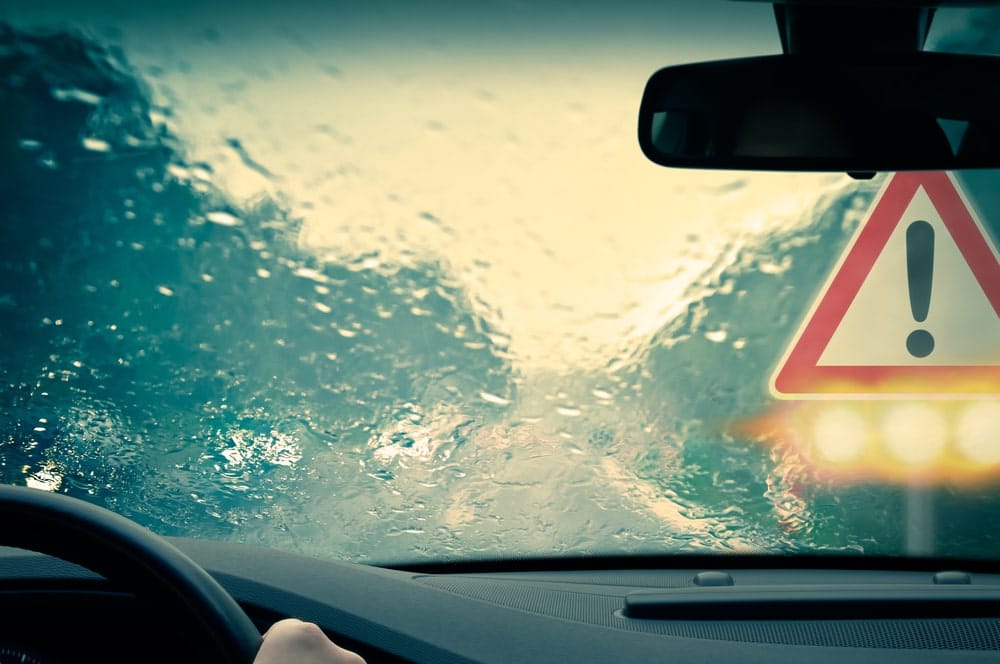
Low visibility can occur in many forms, not just fog. Heavy rain, early mornings, late evenings, mist or spray from other vehicles can all reduce how much you see. When driving in bad weather like this, use dipped headlights, adjust your speed and allow more braking distance. Rain can distort your view and make lights from other vehicles harder to judge. Mist or spray can cover your windscreen quickly, so ensure your wipers are working well and your washer fluid is topped up.
If driving in darkness combined with poor weather, avoid staring directly into oncoming headlights. This can temporarily blind you or make it difficult to see the road. Instead, focus slightly to the left of the road while using the white or yellow lines to guide your position.

Increasing Your Following Distance for More Time to React
One of the simplest but most important techniques when driving in bad weather is increasing the distance between you and the vehicle in front. In dry conditions, the recommended following distance is two seconds. In poor weather, this should be doubled or even tripled. More space gives you more time to brake gently, reduces panic and prevents collisions if the car ahead slows or stops suddenly.
Keeping a larger gap also gives you a clearer view of the road, allowing you to anticipate hazards earlier. Many learners underestimate how valuable extra space is, but it is one of the biggest confidence boosters in poor conditions.
Driving in Bad Weather: How to Steer Smoothly and Safely
Steering too quickly or too sharply on slippery or windy roads can cause your tyres to lose grip. Smooth steering keeps the car balanced and reduces the risk of skidding. When the weather is bad, avoid sudden movements with the wheel. Instead, make calm, deliberate adjustments. If you feel your car being pushed by the wind or sliding slightly on wet or uneven surfaces, maintaining gentle, steady steering helps regain control without overreacting.
Your hands should stay in a strong, stable position, typically at “10 and 2” or “9 and 3” on the wheel. This gives you maximum control when the weather becomes unpredictable.
Adjusting Your Braking and Acceleration
When the weather is poor, both braking and accelerating require more awareness. Harsh braking can cause skidding, especially on wet, icy or loose surfaces. Hard acceleration can cause the wheels to spin or lose traction. The safest technique is to brake earlier and more gradually, giving the car more time to slow down without sliding. When accelerating, apply pressure gently to maintain smooth movement.
If you drive a manual car, selecting the right gear is especially important. Lower gears give more control and prevent the car from speeding up too quickly downhill. Automatics handle this more smoothly, but even then, you still need to reduce your speed early.
Driving in Bad Weather: Staying Visible to Other Road Users
In bad weather, other drivers may struggle to see you just as much as you struggle to see them. To improve your visibility, use your headlights appropriately, keep your windscreen clear and avoid driving too close to the car in front where spray can block your view. Make your signals clear and early, giving other drivers enough time to react.
A common mistake learners make is underestimating how difficult it is for other cars to see them. Being cautious and predictable helps keep you visible and safe.
Preparing for Bad Weather Before You Even Drive
The safest drivers begin preparing long before the rain, fog or wind appears. Before starting your journey, check that your lights are working, your windscreen is clean and your tyres have enough tread depth. If your windscreen wipers smear instead of clearing, replace them as soon as possible. Good vision is essential when the weather changes.
If you know the weather will be poor, allow extra time for your journey. Rushing is one of the biggest contributors to accidents in bad weather.
Driving in Bad Weather: Staying Calm When Conditions Feel Unpredictable
Bad weather can make even confident learners feel uncertain. The key is to remain calm and avoid reacting suddenly. If your car sways in the wind, breathe deeply and keep the wheel steady. If fog suddenly appears, reduce your speed smoothly rather than braking hard. If a patch of heavy rain limits your visibility, ease off the accelerator until you can see clearly again.
Panic leads to jerky movements, which make the car harder to control. Calmness, on the other hand, gives you the clarity to react safely.
Knowing When to Pull Over and Wait
Sometimes the weather becomes too severe for safe driving. If visibility drops to the point where you can barely see the road, or if the wind is strong enough to make the car drift repeatedly, it may be safer to pull over. Look for a safe space such as a lay-by or designated parking area. Avoid stopping on bends or the hard shoulder unless it’s an emergency.
There is no shame in stopping. Knowing your limits is part of being a responsible driver.
Driving in Bad Weather: What to Expect on Your Driving Test
Bad weather during your driving test may make you feel nervous, but examiners do not expect perfection. They expect safety. Many learners assume they will fail if the weather is poor, but in reality, examiners allow for the conditions and assess your ability to adapt. Slowing down, increasing your following distance and making calm decisions all show maturity. As long as you remain safe and in control, bad weather will not prevent you from passing.
Final Thoughts
Becoming confident when driving in bad weather takes practice, patience and the willingness to stay calm in unfamiliar conditions. Wind, fog and low visibility challenge every driver, not just learners. By reducing your speed, increasing your observations and adjusting your driving to suit the conditions, you can stay safe and in control even when the road feels unpredictable. With experience, you will learn that bad weather driving is less about fear and more about understanding what your car needs from you. Stay patient, stay alert and trust your growing skills — and you will handle whatever the weather brings.


