


Dual Controls in Learner Cars: What New Drivers Need to Know
When you step into a learner driver car for the first time, one of the things you may notice is the second set of pedals at the passenger side. These are the dual controls. They play an essential role in keeping you safe, building your confidence and helping instructors guide you through each stage of learning to drive. For many new drivers, dual controls feel reassuring, but they can also spark curiosity. How do they work? When does the instructor use them? Are they connected to your pedals? And most importantly, how do dual controls affect your learning experience?
Understanding dual controls in learner cars can help you feel more comfortable, more aware and more in control during your lessons. Instead of wondering what your instructor might do, you will understand their purpose and how they support your progress from beginner to confident, independent driver. This guide will walk you through everything you need to know about dual controls, their function, their benefits and how they shape the learning journey.
Why Dual Controls Exist in Learner Cars
Dual controls are installed in learner cars for one main reason: safety. Learning to drive means experiencing new situations for the first time. Mistakes are absolutely normal, and dual controls exist to prevent a mistake from turning into something dangerous. In early lessons, learners may stall unexpectedly, brake too late, misjudge speed or struggle with clutch control. Dual controls allow the instructor to intervene quickly and smoothly without panic.
Even as you advance, dual controls remain a backup system. They act as a safety net so you can learn challenging skills—roundabouts, busy junctions, hill starts or merging—without fear. Knowing the instructor can help instantly if something goes wrong allows you to focus on learning rather than worrying about what might happen.
Dual Controls in Learner Cars: What They Include
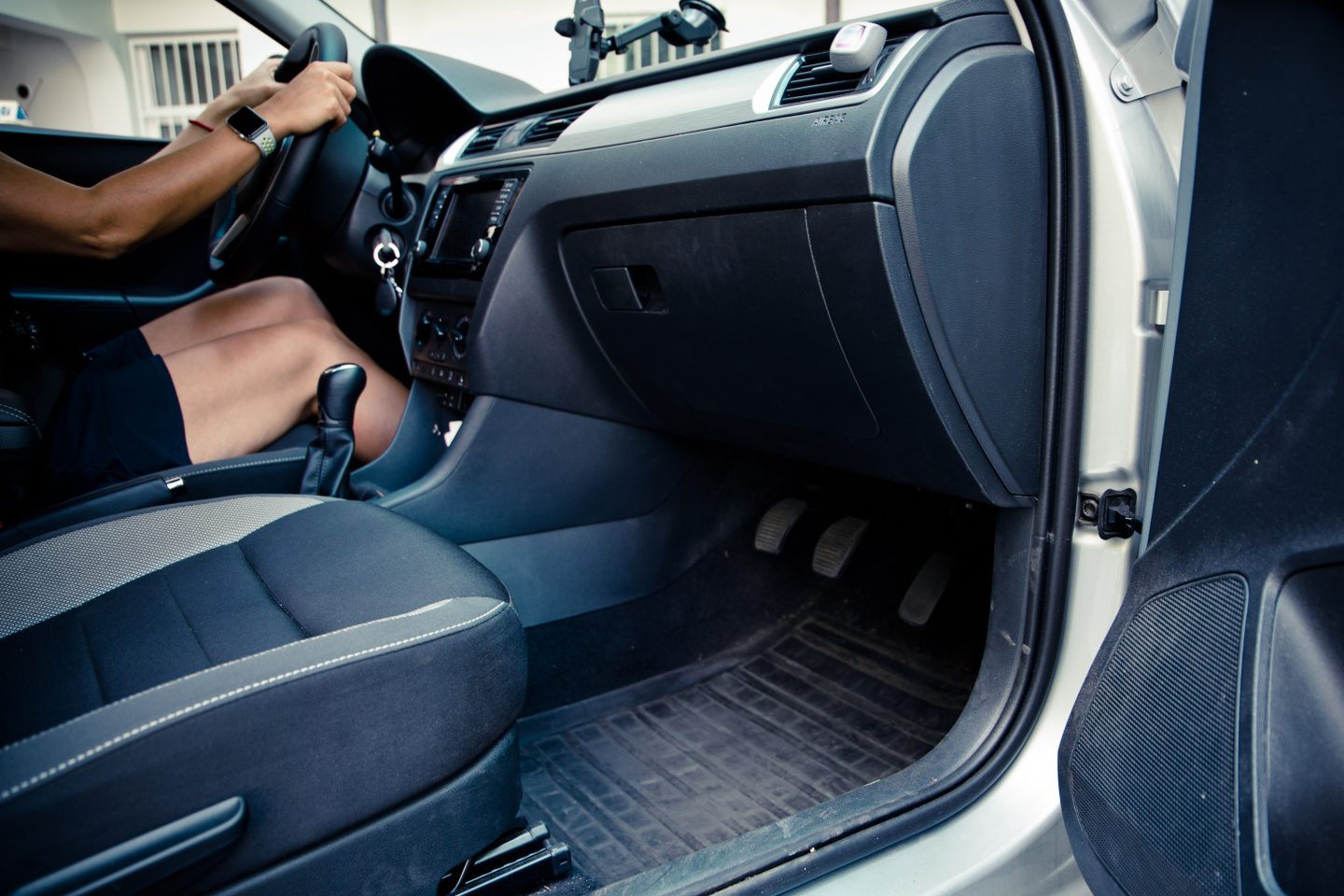
In most UK learner vehicles, dual controls include the brake pedal and the clutch pedal on the instructor’s side. This means your instructor can slow down the car, bring it to a stop or control the clutch to prevent a stall. Automatic cars usually have just a brake pedal on the instructor’s side, since there is no clutch.
These pedals are connected mechanically or electronically to the car’s main systems. When the instructor presses their brake pedal, the car responds the same way it would if you pressed yours. Some systems connect directly to your pedals, while others operate independently, but the result is always the same: shared control when needed.
How Dual Controls Work During Lessons
Dual controls are not used constantly. Professional instructors rely primarily on your control, intervening only when necessary. During your first lesson, you might feel the instructor use the controls more as you become familiar with steering, braking, clutch use and positioning. As you gain confidence, they step in less and allow you more space to manage decisions on your own.
Dual controls are most commonly used in situations where safety requires quick action, such as preventing the car from rolling backwards, stopping too late at a junction or avoiding a hazard you may not have seen. They are not there to interrupt your learning but to support it.
Dual Controls in Learner Cars: Why They Build Confidence
Knowing that your instructor can take over when necessary often makes new drivers feel less nervous. Many learners fear making mistakes, especially in busy traffic. Dual controls help reduce that fear because you understand that mistakes will not lead to danger.
Confidence grows when you feel supported. Instead of worrying about what might happen, you can focus on clutch control, mirror checks, speed management and road awareness. With dual controls in place, you can challenge yourself in real-world situations without feeling overwhelmed.
Understanding When Your Instructor Might Use the Controls
Your instructor will use dual controls only when absolutely necessary. They are trained to let you manage as much as possible, stepping in only to prevent unsafe situations. You may feel a slight pressure on the brake pedal or clutch when the instructor uses them. Sometimes you will notice it, sometimes you won’t.
They might use the brake if you approach a junction too fast, if a pedestrian steps into the road or if a car ahead slows suddenly. They may use the clutch to prevent a stall when moving off or during hill starts. Dual controls act as a gentle guide rather than a forceful interruption.
Dual Controls in Learner Cars: Helping You Develop Better Awareness
One of the hidden benefits of dual controls is the way they help learners improve their awareness. If you notice your instructor using the brake pedal, you may realise that you misjudged speed or following distance. If they use the clutch, it may be a sign that your timing needs refining.
These small corrections help you understand what needs improvement without losing confidence. They guide your learning subtly and effectively, giving you the chance to adjust your habits and improve your road awareness.
How Dual Controls Support Different Learning Stages
Dual controls play a different role depending on your stage of learning. In early lessons, they provide reassurance. As you progress, they allow your instructor to introduce more challenging scenarios like roundabouts, multi-lane roads or steep hills more confidently.
When you approach your practical test stage, your instructor will use dual controls less frequently. This helps you demonstrate independence and prepares you for driving without assistance. However, the controls remain available as a backup, ensuring your safety at all times.
Dual Controls in Learner Cars: Manual vs Automatic
If you are learning in a manual car, dual controls usually include a clutch and brake pedal. Your instructor can help control the clutch if the car begins to stall or roll. This is particularly useful during hill starts, slow-moving traffic or when navigating complex manoeuvres.
In automatic cars, there is no clutch, so dual controls typically include only a brake pedal. Automatic learners benefit from this because the instructor can assist when necessary without impacting gear changes or clutch timing.
Why Instructors Use Dual Controls Sparingly
Good instructors do not overuse dual controls, because doing so could slow your progress or make you dependent on them. Professional instructors are trained to judge when to allow you full control and when to intervene. Their goal is always to help you become a confident, independent driver.
Dual controls are a safety measure, not a teaching shortcut. If an instructor steps in frequently, it may signal that you need more practice on a particular skill. It can also be a sign that traffic conditions were challenging or that you encountered an unusual situation.
Dual Controls in Learner Cars: Creating a Safe Learning Environment
Safety is always the priority during driving lessons. Dual controls ensure that your instructor can manage risk instantly if needed. This makes it possible for learners to experience real roads earlier in their journey without being limited to quiet streets.
Because of this added safety, instructors can introduce skills such as roundabouts, large junctions, busy roads or dual carriageways much sooner. As a result, your learning becomes more balanced and realistic.
Understanding the Difference Between Instructor Control and Learner Control
Dual controls allow for shared responsibility, but the ultimate goal is for you to take full control as soon as you are ready. Your instructor will gradually step back, giving you more independence while quietly monitoring your decisions.
This gradual shift helps build long-term confidence. The more you practise without instructor intervention, the more prepared you become for driving without support.
Dual Controls in Learner Cars: Handling Mistakes Without Panic
All learners make mistakes. Dual controls ensure that mistakes do not become dangerous. Whether you misjudge a gap, brake too late or stall at a junction, the instructor is there to help you recover safely.
This creates a stress-free learning environment. Mistakes become learning opportunities rather than moments to fear. Instead of panicking, you can reflect, improve and move on with confidence.
How Dual Controls Influence Your Driving Test Preparation
As your test date approaches, your instructor will use dual controls less frequently. This helps you build the independence required for test day. In fact, examiners are trained to look for safe, confident decision-making without outside help.
During mock tests, most instructors avoid using dual controls unless absolutely necessary. This helps you experience the pressure of being fully responsible while still practising in a safe environment.
Dual Controls in Learner Cars: What Parents Should Know
If you practise with a family member, they may wonder why the instructor’s car behaves differently from their own. Dual controls explain this difference. Parents often feel reassured knowing their teen or adult learner has an instructor who can take control instantly if needed.
This added layer of protection gives learners more freedom to develop skills while keeping everyone safe.
Final Thoughts
Dual controls form the foundation of safe, supportive driving lessons. They allow learners to build confidence gradually, explore new scenarios safely and make mistakes without fear. Understanding dual controls in learner cars helps new drivers feel informed, comfortable and ready to take on each stage of the learning journey with clarity and confidence.
The more familiar you become with how dual controls work, the easier it is to trust the learning process. With patience, guidance and practice, you will reach a point where those controls stay untouched—because you will be driving safely and independently on your own.


