

Driving Theory Test Centre: What to Expect on the Day
Taking your theory test is one of the first major milestones on your journey to becoming a fully licensed driver. Even though the theory test is not as physically intimidating as the practical test, visiting the driving theory test centre for the first time can still feel nerve-racking. Many learners worry about what will happen when they arrive. What documents do you need? What is the check-in process like? Will it be quiet or busy? How does the hazard perception test work? And what happens after you finish?
Understanding what to expect removes uncertainty and helps you feel more prepared, calmer and more confident. The more familiar the process feels, the easier it is to focus on the test itself rather than worrying about the environment. This detailed guide explains exactly what happens at the driving theory test centre, from the moment you arrive to the moment you receive your results.
Arriving at the Driving Theory Test Centre: What You Need Before You Go In
The first step to a smooth test day is arriving prepared. Before you even step into the driving theory test centre, make sure you have the correct documents.
You must bring your:
Valid UK provisional driving licence (photocard)
Nothing else is accepted. Without it, you cannot take your test.
Arrive 10–15 minutes early. Arriving too early creates unnecessary waiting time, while arriving late can result in the test being cancelled with no refund. The centres are usually located in busy areas, so consider traffic, unfamiliar routes and parking ahead of time. If you are walking or using public transport, allow extra time for delays.
Checking In at the Driving Theory Test Centre
When you walk into the driving theory test centre, you’ll be greeted by a receptionist or attending officer. They will check your provisional licence and confirm your booking.
You may be asked to:
Sign a digital screen
Confirm your address
Verify your personal details
After this, you will be guided to a small waiting area where you will wait to be called. This part of the process is calm and structured. You do not need to worry about rushing — staff will let you know exactly what to do.
Security Checks: What to Expect
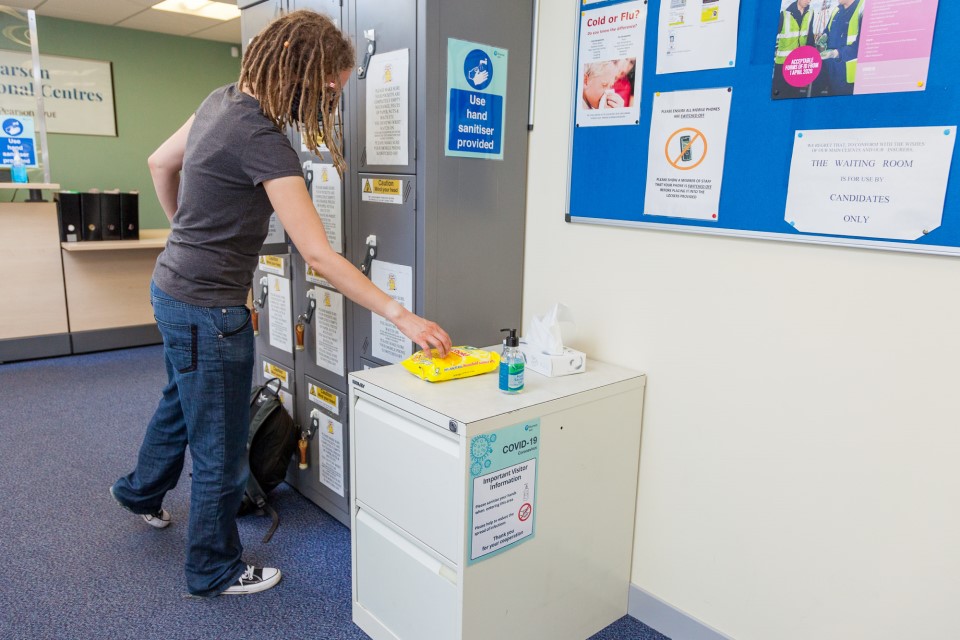
Before entering the testing room, most theory test centres follow strict security procedures. This ensures fairness and prevents cheating. Depending on the location, you may be asked to:
Store your personal belongings in a locker
Turn off your phone completely
Empty your pockets
Remove coats, scarves or hats
The key point is that you cannot take any devices, notes or electronic items into the test room.
Most learners find this part straightforward. The staff are friendly and used to guiding nervous first-time candidates.
Inside the Driving Theory Test Centre: The Testing Room Environment
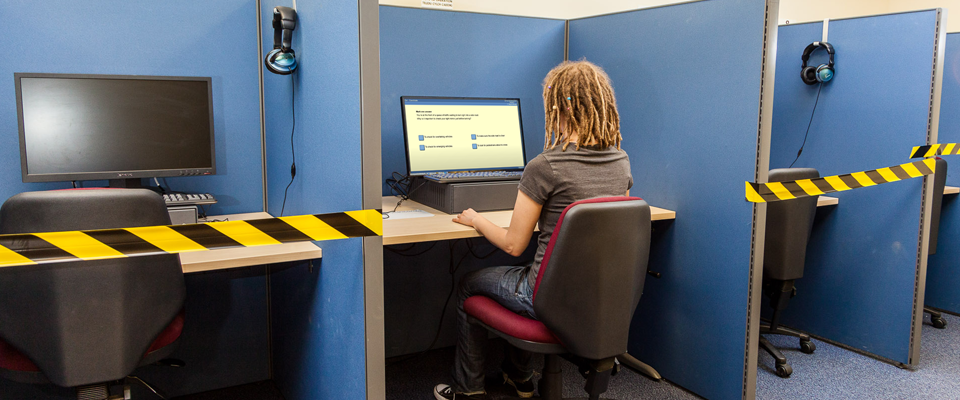
When you enter the testing room, you will see rows of computer desks separated by partitions for privacy. Each workstation includes:
A computer
Headphones
A comfortable chair
The room is typically quiet. Speaking is not allowed.
The atmosphere may feel formal, but it is designed to help you concentrate. Some learners find the quietness calming, while others feel nervous at first. Once the test begins, most people forget about the environment and focus on the questions.
Understanding the Format of the Driving Theory Test
The theory test is made up of two sections:
Multiple-choice questions
Hazard perception
You must pass both parts to pass the theory test. The computer will guide you through each stage.
Multiple-Choice Questions: What You Need to Know
The first part of your test consists of 50 multiple-choice questions based on the Highway Code, road safety, road signs and general driving knowledge.
You can:
Flag questions to return to later
Review your answers before submitting
Use headphones to hear the voiceover if needed
There is also a short practice tutorial before the test begins. Many learners find this calming because it familiarises them with the controls and layout.
Driving Theory Test Centre: The Hazard Perception Test
After completing the multiple-choice questions, you move on to the hazard perception test.
This section tests your ability to recognise developing hazards in real traffic situations. It includes:
14 video clips
At least one clip with two hazards
You click the mouse as soon as you spot a hazard developing. The earlier you react, the more points you score.
There is no “pause” or “rewind,” and you cannot watch clips again.
The challenge is not to click too early or too often. Rapid, repeated clicking may reduce your score because the system might interpret it as guessing.
Breaks Between Test Sections: What Happens
You get a short optional break between the two parts of the test. This is not a full break outside the room — you simply get a pause.
If you need a moment to reset, breathe or gather your thoughts, use it.
You do not need to rush straight into the next section. The computer will wait until you are ready.
Time Limits and How Long the Theory Test Takes
The entire theory test usually takes around 45–60 minutes.
Multiple-choice questions have a 57-minute limit (although most learners finish early).
There is no strict time limit for hazard perception, but the clips last about a minute each.
With check-in, security and result collection, expect to spend about 1 to 1.5 hours at the driving theory test centre.
Your First Time at the Driving Theory Test Centre: Staying Calm and Focused
It’s normal to feel nervous. But remember:
You control the pace
You can re-read questions
You can flag any that confuse you
You can breathe, pause and think clearly
The best way to stay calm is to focus on one question at a time. Do not rush and do not worry about other people in the room.
Many learners find that once they answer the first few questions, nerves fade quickly.
Driving Theory Test Centre: What Happens After You Finish
Once your test is complete, you’ll be asked to leave the testing room and return to the reception area.
You will receive your results within a few minutes.
The staff member will:
Hand you a printed result sheet
Tell you whether you passed or failed
Explain next steps
This moment can feel nerve-racking, but staff remain professional and supportive.
If You Pass: What Happens Next
Congratulations — passing your theory test is a major achievement.
Your result letter will include:
Your scores for both sections
Your theory certificate number
Your pass validity period (two years)
You must pass your practical test within this two-year window. If it expires, you must retake the theory test.
If You Do Not Pass: What to Do
Failing the theory test is more common than many learners realise. If you do not pass:
You must wait at least three working days before taking it again
You will keep your result sheet
You can analyse your weaker areas
Most people pass on their second attempt. The key is to review the areas you struggled with and continue practising consistently.
Driving Theory Test Centre: Common Questions from Learners
What if I need glasses?
You can wear glasses or contact lenses during the test.
What if English is not my first language?
You cannot use interpreters, but the voiceover can help.
What if I click too much in hazard perception?
Excessive clicking reduces your score. Click when a hazard develops, not when it merely appears.
What if I’m late?
If you arrive after your time, your test is cancelled and you lose your fee.
What if my phone accidentally stays on in my pocket?
Phones must be turned off. If it rings, your test may be voided.
Driving Theory Test Centre: Practical Tips for a Smooth Experience
Here are simple tips that make the day easier:
Bring your provisional licence
Arrive 10–15 minutes early
Do not bring unnecessary belongings
Switch off your phone completely
Stay calm and read questions carefully
Use the flag feature
Practise hazard perception beforehand
Trust your training — the test is based on rules you can learn
How to Prepare Before You Even Arrive
The more prepared you are, the easier the experience feels.
Use official study materials
Practise mock tests
Use hazard perception software
Review road signs
Stay consistent with daily study
Your goal is not to memorise random facts but to genuinely understand safe driving principles.
Final Thoughts
Visiting the driving theory test centre for the first time may feel unknown, but once you understand the process, the nerves begin to fade. The environment is calm, structured and designed to help you concentrate. Staff explain each step, and everything is straightforward, from check-in to receiving your results.
Whether you pass the first time or need to retake the test, you are building the knowledge and awareness needed to become a safe driver. The theory test is not just an exam — it’s an important part of becoming a confident, responsible driver for life.
Walk into the test centre knowing exactly what to expect, and you will feel far more prepared, calm and ready to succeed.


