
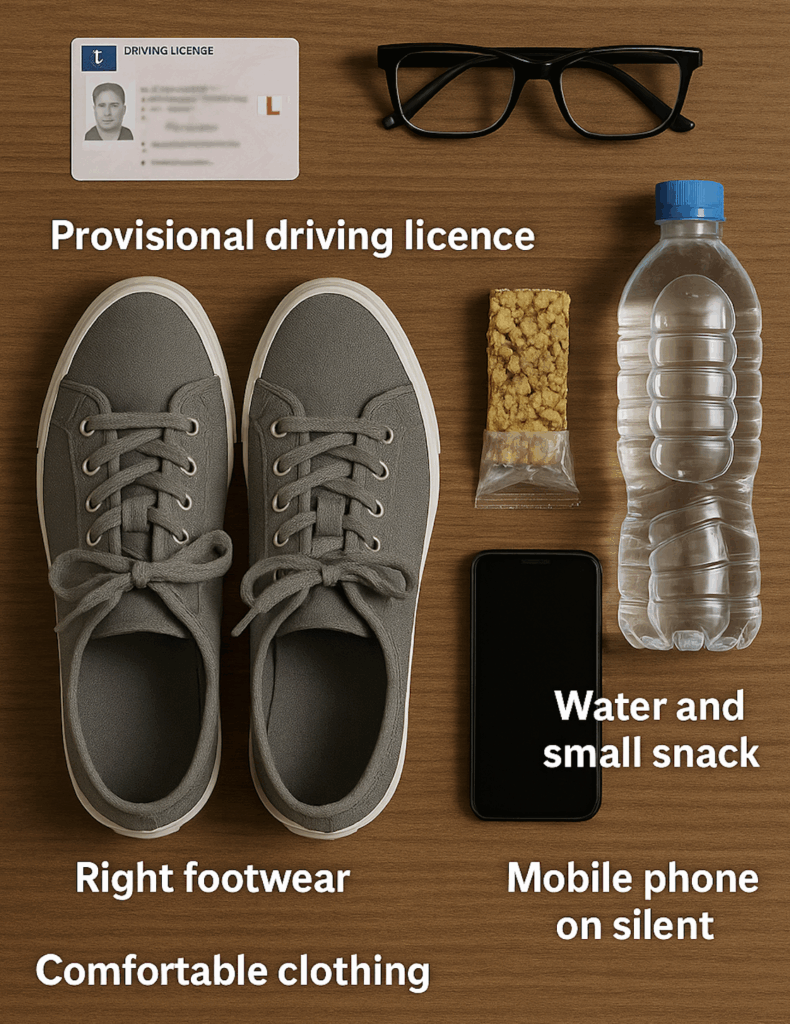

What to Bring to Your First Driving Lesson
Your first driving lesson is an important moment that marks the beginning of your journey toward becoming an independent and confident driver. For many learners, especially those in busy North London locations such as Tottenham, Wood Green, Enfield and nearby areas, the excitement of finally getting behind the wheel comes with a few understandable nerves. One of the easiest ways to reduce stress is to arrive properly prepared. When you know exactly what to bring to your first driving lesson, you can focus on learning instead of worrying about forgotten items or last minute confusion. Being prepared helps you feel calm, organised and ready to make the most out of that first hour in the car. Your first lesson is designed to introduce you to the basics in a comfortable and supportive environment. You are not expected to know anything before you arrive and you certainly are not expected to drive perfectly. What you learn in this session forms the foundation for everything that follows, so having the right items with you allows the lesson to run smoothly. This guide will walk you through everything you need to bring, why each item matters and how showing up prepared can help you progress faster and with more confidence.
Bringing Your Provisional Driving Licence
The most important item to bring to your first driving lesson is your provisional driving licence. Without it, your instructor cannot legally allow you to drive on public roads. It does not matter if you are feeling confident or if you have driven in a different country before. In the UK, the provisional licence is a legal requirement for all new learners. Make sure to bring the physical photocard and not a picture of it on your phone. Your instructor will need to check it in person before the lesson begins. Many learners find it helpful to store their licence in their wallet or purse the night before their lesson so there is no chance of forgetting it in the rush of the day. Forgetting your provisional means your lesson cannot go ahead and you may still be charged, so it is worth double checking before you leave the house.
If You Need Them, Bring Your Glasses or Contact Lenses
If your licence states that you must wear corrective lenses when driving, then you must bring your glasses or contact lenses. You will be asked to read a number plate from 20 metres away before the car moves. If you cannot meet this requirement, the lesson cannot continue. Even if you do not usually think of yourself as someone with poor vision, reading number plates, spotting signs and noticing hazards requires clear eyesight. Safe driving depends heavily on your ability to see clearly, so bringing your glasses is essential if you rely on them. If you wear contacts, it is a good idea to bring your glasses as a backup in case your lenses become uncomfortable during the lesson. Having both ensures you remain comfortable and safe behind the wheel.
Wearing the Right Footwear
Selecting the right footwear may not seem important at first, but it plays a major role in how comfortable you feel controlling the pedals. Shoes with thick soles, heavy boots, high heels or loose sandals make it difficult to feel how the pedals respond to pressure. This is especially important for learners in manual cars because clutch control requires precise movement. Choose shoes with a thin, flexible sole that allow you to feel the pedals easily. Everyday trainers, flat pumps or simple walking shoes are usually the best options. Wearing the right shoes on your first lesson helps you learn faster and feel more in control. It also helps your instructor teach you more effectively because you will be able to sense the car’s behaviour clearly.
Comfortable Clothing for Easy Movement
Driving requires a surprising amount of body movement, especially for beginners. You need to turn your head to check blind spots, adjust seating, move your arms freely on the wheel and sit comfortably for an extended period of time. Wearing comfortable clothing helps with this. Choose clothing that allows easy movement and does not restrict your arms, legs or shoulders. Avoid very tight clothing, bulky jackets or outfits that feel uncomfortable when seated. If the weather is cold, bring a warm layer that you can remove easily if you get warm during the lesson. If the weather is warm, choose breathable clothing that helps you stay comfortable and focused. The goal is to feel relaxed, flexible and able to move naturally while driving.
Water and a Small Snack
Many learners feel nervous before their first driving lesson and forget to eat or drink. Having a bottle of water helps you stay hydrated throughout the lesson, especially on hot days. You may not drink during the drive, but having water nearby keeps you comfortable before and after the session. A light snack before your lesson can also help maintain your energy, particularly if you have a long session booked. Avoid heavy meals just before driving, as these can make you feel tired or sluggish. A small snack such as fruit, crackers or a granola bar is usually enough to keep your focus sharp and your energy stable.
Your Mobile Phone on Silent Mode
You should bring your phone for practical reasons. You may need it to contact your instructor, confirm pick up details or check the time after your lesson. However, once the lesson begins, your phone should be set to silent or do not disturb mode. Driving requires full concentration and distractions can be dangerous. Keeping your phone in your bag or pocket helps prevent unnecessary interruptions and ensures your attention stays on the road and on your instructor’s guidance.
A Calm and Positive Mindset
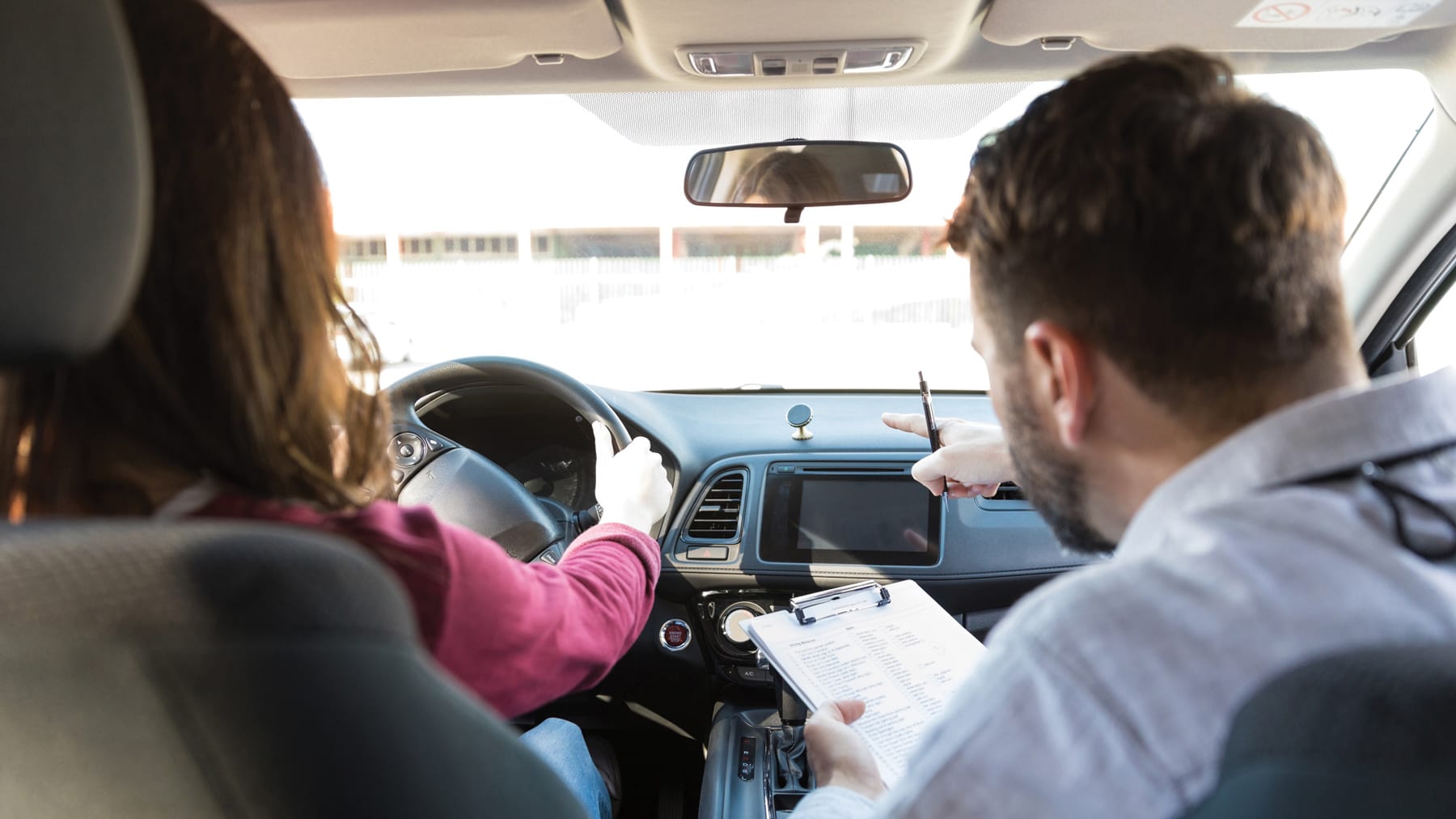
Although this is not something you pack in a bag, your mindset is one of the most important things to bring to your first driving lesson. Feeling nervous is normal. Many learners worry that they will make mistakes or that driving will feel overwhelming. Remember that your instructor fully expects you to be a beginner. You are not supposed to know anything yet. Your lesson is designed to build your confidence gently, one step at a time. Arrive with patience, willingness to learn and openness to guidance. Your mindset will influence the way you absorb information, handle mistakes and grow from each experience. Staying calm helps you think clearly and respond confidently to your instructor’s support. The more relaxed you feel, the more enjoyable and productive your lesson will be.
Optional but Helpful: A Notebook or Notes App
Some learners find it useful to take notes after each lesson. You do not need to write anything down during the drive, but keeping a record afterwards can help you remember tips, techniques and areas to improve. You might write about clutch control, steering methods, mirror checks or manoeuvre instructions. Over time, these notes become a valuable personal guide that helps you progress more smoothly.
Your Questions and Curiosity
Your first driving lesson is the perfect time to ask questions. Whether you want to know how the lessons are structured, how long it usually takes to pass the test, what areas you will be driving in or how to prepare for your theory exam, your instructor will be happy to explain. Bringing your questions shows that you are engaged, interested and eager to learn. Never hesitate to ask for clarification. No question is too simple or too obvious. Your instructor is there to support your learning journey.
Bringing Whatever Confidence You Have
Confidence looks different for every learner. Some people feel ready and eager to begin driving, while others worry they will not be able to control the car. Both reactions are perfectly normal. It is important to bring whatever confidence you have, even if it is only a small amount. Your instructor will help you build on it gradually. Confidence grows with experience and with positive, supportive guidance. Your first lesson is not a test. It is the beginning of a process in which your instructor helps you develop at your own pace.
What Happens if You Forget Something
If you forget a small item such as water or a notebook, the lesson can continue without any problems. However, if you forget your provisional licence or your glasses when they are required for driving, your instructor will not be able to start the lesson. This is why preparing everything the night before helps reduce stress and ensures the session goes smoothly.
Why Preparation Helps You Learn Faster
Arriving prepared helps you relax and focus completely on learning. When you have everything you need, you feel more confident and more in control of the experience. Being organised also sets the tone for future lessons. It shows your instructor that you are committed and serious, and it allows both of you to make the most out of your time together. Learning to drive is not just about controlling the car. It is also about developing habits that keep you safe on the road. Being prepared is one of those habits.
What to Expect During Your First Lesson
Your first lesson will usually include:
Getting comfortable in the seat
Adjusting the seating, steering and mirrors
Learning the purpose of each control
Understanding the pedals and the gear system in manual cars
Practising gentle acceleration and braking
Learning how to move off safely and bring the car to a controlled stop
Driving on quiet local roads for early practice
Your instructor will guide you step by step. Everything will be explained clearly and patiently. You will not be pushed beyond what feels comfortable for you. The goal is simply to help you begin developing confidence and control.
Final Thoughts
Bringing the right items to your first driving lesson helps you start your driving journey in the best possible way. Your provisional licence, your glasses if you need them, the right shoes, comfortable clothing, water, your phone on silent and a positive mindset all make a big difference. When you arrive prepared, you can give your full attention to learning and enjoy the experience much more.
Ready to Begin Your Driving Journey in North London
If you are preparing for your first lesson and want a calm, patient and experienced instructor, we are here to help. We offer manual and automatic lessons across North London including Tottenham, Wood Green, Enfield and surrounding areas. Our goal is to help you feel confident, capable and safe from the very first day.


