


Clutch Control for Learner Drivers: Essential Techniques Explained
Learning to drive a manual car introduces you to one of the most important and unique skills in the entire driving experience: clutch control. While automatic cars handle gear changes for you, manual learners must learn how to balance the clutch pedal with the accelerator smoothly and confidently. This skill affects everything you do, from pulling away to navigating slow-moving traffic to completing manoeuvres during your driving test. Good clutch control means confidence; poor clutch control means stalling, rolling back or feeling overwhelmed.
Clutch control is something every learner struggles with at the beginning, so if you feel nervous about it, you are not alone. Many new drivers worry about hill starts, biting points, stalling at traffic lights or controlling the car at very slow speeds. With practice, patience and the right techniques, clutch control becomes natural — almost automatic — and you will no longer think about it consciously. This guide explains what clutch control is, why it matters and how to develop strong, smooth control during lessons, private practice and your driving test.
What Clutch Control Actually Means
Clutch control refers to your ability to manage the clutch pedal so the engine and gearbox engage smoothly. When you press the clutch pedal down, you disconnect the engine from the wheels. When you raise the clutch, the two reconnect.
This reconnection needs to happen smoothly; otherwise, the car will stall or jerk. The key stage in this process is called the biting point, where the clutch plates begin to meet and the car becomes ready to move.
Understanding this mechanism helps you see why clutch control is so essential. Without it, you cannot pull away, change gears smoothly, complete manoeuvres or maintain steady control at low speeds.
Clutch Control: Why It Matters So Much for Manual Learners
Clutch control is more than a technical skill — it is the foundation of all your slow-speed movements. You use it in almost every part of your driving journey. It helps you pull away without stalling, navigate queues, complete hill starts, reverse smoothly and maintain steady speed during manoeuvres.
During the practical test, examiners watch your clutch control very closely. Sudden stalls, jerky starts, rolling back on hills or harsh gear shifts all count against you. Mastering clutch control early ensures you build smooth, safe driving habits that last long after your test.
Getting Comfortable with the Pedals
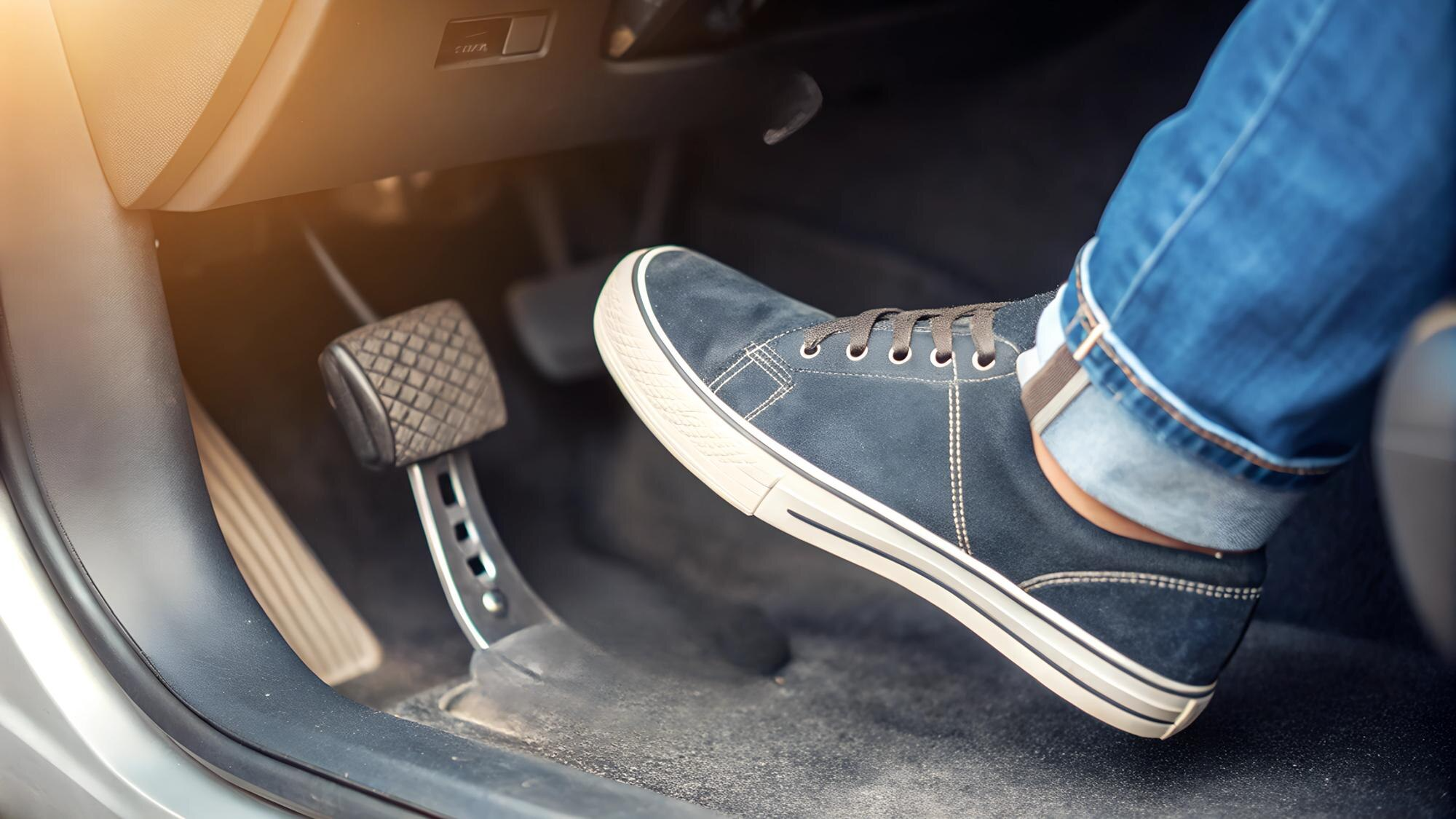
Before you even attempt clutch control, you must feel comfortable with your seating position and pedal reach. Your seat should be close enough that you can fully press the clutch with your left leg without stretching or locking your knee. Your heel should remain on the floor so your foot pivots smoothly.
Clutch control requires sensitivity, not force. If you cannot feel the clutch pedal clearly or your foot is stiff, it becomes harder to find the biting point or make small adjustments.
Clutch Control: Understanding the Biting Point
The biting point is the foundation of clutch control. It is the moment when the clutch plates begin to connect, giving the engine enough power to move the car without stalling.
To find the biting point:
Press the clutch fully down.
Select first gear.
Raise the clutch slowly until the car feels like it wants to move. The engine note changes slightly, and the front of the car may lift gently.
Hold your foot steady.
At this stage, you do not move the car yet. You simply practise finding the point where the car is ready to go. Mastering this early helps reduce stalls and increases confidence.
Using the Accelerator with Clutch Control
Many learners focus only on the clutch when pulling away, but gentle accelerator use is equally important. Once you find the biting point, adding a small amount of gas — around 1500 rpm — helps you move away smoothly.
Think of clutch control like balancing two forces: the engine wanting to move the car and the clutch holding it back. Too little gas and the car stalls. Too much gas and the car jerks forward.
Smoothness comes from practice, but the principle remains simple: add a little gas first, then raise the clutch to the biting point slowly.
Clutch Control: Pulling Away without Stalling
Stalling is a normal part of learning to drive. Every manual driver has stalled at some point — even experienced ones. Clutch control reduces the likelihood of stalling by helping you coordinate the pedals.
To pull away smoothly:
Find the biting point.
Add gentle gas.
Raise the clutch slowly while releasing the handbrake (if used).
Keep your hands steady on the wheel.
Do not rush the clutch.
You will feel the car move forward. Once moving, raise the clutch fully and continue with the accelerator.
The biggest mistake learners make is lifting the clutch too quickly. Clutch control means patience; even a one-second rush can cause a stall.
Clutch Control During Hill Starts
Hill starts are one of the most stressful situations for manual learners, but clutch control makes them manageable. The key is to find a strong biting point that prevents rollback.
On a hill:
Press the clutch fully down.
Apply the handbrake.
Select first gear.
Raise the clutch until you reach the biting point and feel the car pull against the handbrake.
Add a little extra gas.
Release the handbrake while easing the clutch up slightly.
With good clutch control, the car moves forward smoothly without rolling backwards. Practise hill starts regularly so they become natural.
Clutch Control: Slow Speed Manoeuvres
Manoeuvres like reverse bay parking, parallel parking or three-point turns require extremely fine clutch control. Your instructor will likely tell you: drive the car using the clutch, not the accelerator.
At very slow speeds, you often do not need the accelerator at all. Instead, you find the biting point and hold it there or make tiny adjustments.
Remember:
At slow speeds, the clutch is your speed control.
At normal speeds, the accelerator is your speed control.
This distinction helps you understand why clutch control is so important for manoeuvres.
Avoiding Rolling Back with Clutch Control
Rollback can happen on hills or even slight inclines when pulling away. Clutch control prevents this by balancing the engine power against gravity.
If you are struggling with rollback, pause and reset. Rushing increases the risk of mistakes. Use the handbrake for support if needed — there is no penalty for using it during your test if it helps you stay safe.
Confidence comes from repetition. The more you practise, the more you will be able to balance the car without relying on the handbrake.
Clutch Control: Changing Gears Smoothly
Gear changes rely heavily on clutch control. When changing gears:
Ease off the accelerator.
Press the clutch fully down.
Change the gear.
Release the clutch smoothly while adding gentle acceleration.
Releasing the clutch too quickly causes jerking, while holding it too long creates unnecessary wear and loss of power. Smoothness comes from understanding the balance and timing.
Clutch Control in Stop-Start Traffic
Slow traffic is the ultimate test of clutch control. You may need to move just a few inches at a time, and you cannot fully release the clutch or rely constantly on the accelerator.
Use the clutch to creep forward by finding the biting point and holding it. If the car begins to move too quickly, press the clutch down slightly. If traffic stops, press the clutch fully down and brake.
Good clutch control in traffic allows you to stay calm instead of worrying about stalling.
Clutch Control: Avoiding Common Mistakes
Learners often make predictable mistakes when developing clutch control. These include:
Lifting the clutch too quickly
Not using enough gas
Riding the clutch (keeping it partially raised too long)
Holding the biting point for too long
Panicking during hill starts
To fix these, focus on slow, steady movements and trust your instructor’s feedback. Consistency is more important than perfection early on.
Using Clutch Control on Different Road Types
On town roads, clutch control helps you navigate junctions and slow traffic.
On rural roads, it helps when approaching tight bends or uneven surfaces.
On dual carriageways, clutch control matters mostly during merging or stop-start conditions.
Understanding clutch control in varied environments helps you become a well-rounded driver.
Clutch Control: How to Practise Effectively
You can improve clutch control dramatically by practising specific exercises:
Find the biting point repeatedly until it becomes predictable.
Practise slow driving on quiet streets.
Do controlled hill starts with your instructor.
Practise creeping movements in empty car parks.
Repeat gear changes until they feel natural.
The more experience you gain, the smoother your clutch control becomes.
Final Thoughts
Clutch control is one of the most important skills manual learners must develop. It affects everything from pulling away to manoeuvring to driving in traffic. While it may seem challenging at first, every learner improves with practice. Once you understand the biting point, balance the pedals and stay patient with yourself, clutch control becomes smooth, natural and reliable.
Mastering clutch control early gives you confidence throughout your lessons and prepares you for a calm, controlled driving test. With time, you will no longer think about how to move the clutch — your foot will simply know what to do.


